
Patio Builders in Ireland, Priced by the m²
Tell us which natural stone you want and rough square metres. See what excavation, Clause 804 sub-base and full-bed mortar laying cost in Ireland. Then one local builder rings you with a written price.
Free, no obligation. One local builder prices it, not five.
- €130 to €240/m²natural stone patio excavated and laid
- 150 mmminimum step below house damp-proof course
- 1:60 fallslope away from house walls
- 1,836,728occupied private Irish homes, Census 2022
Six natural stone patio builds in Ireland
Pick a stone type or patio build to check going m² rates and laying specs.
 Flamed granite patio
 Irish limestone patio
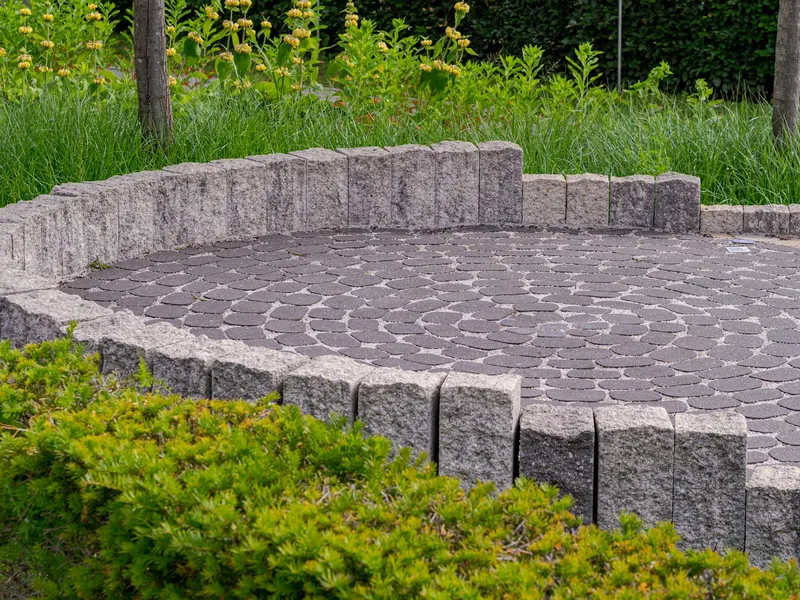 Natural stone cobbles & paths
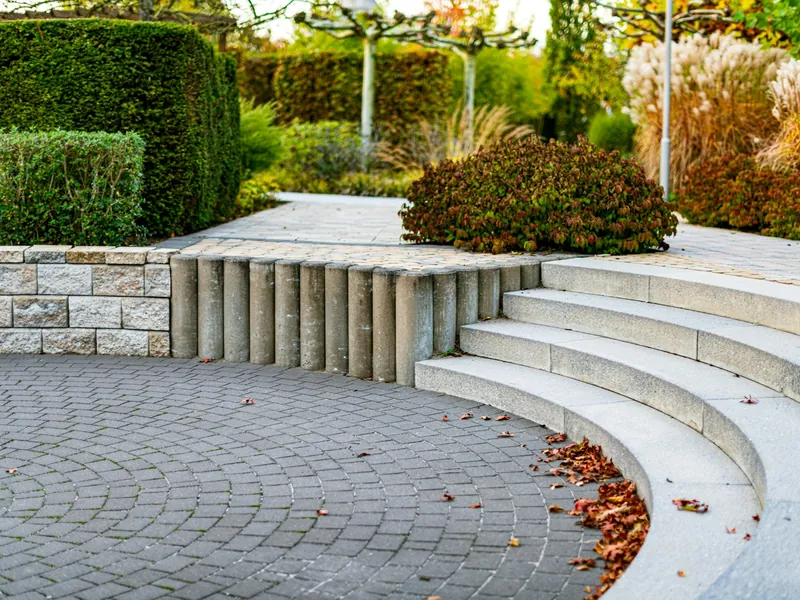 Multi-level steps & low walls
 Extensions, re-pointing & ACO
Price my patio
Four quick taps and our Irish m² price guide shows before we ask for a phone number. One local builder rings you, not five.
An Indian sandstone patio, 20 to 35 m², excavated from lawn on Clause 804: €3,650 to €5,200, excavated and laid.
How this m² guide is worked out
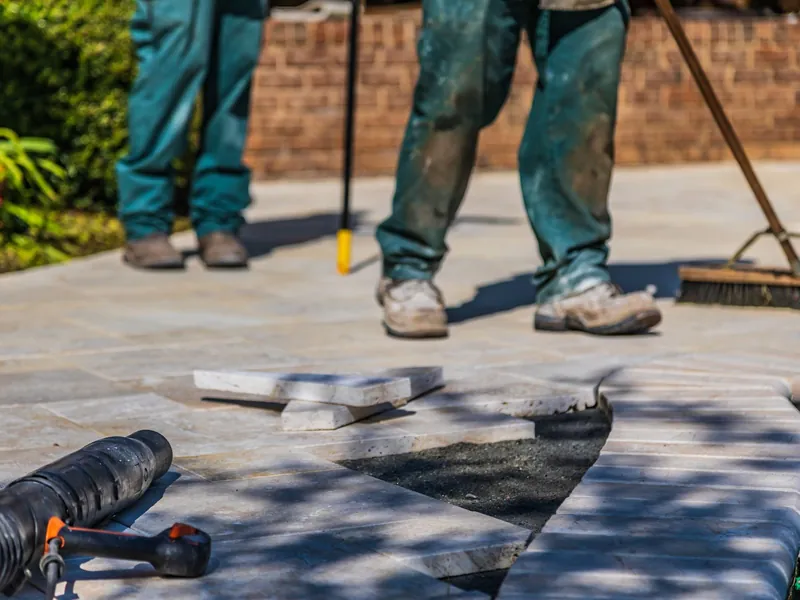
Every figure reflects going Irish supply-and-fit natural stone patio rates: digging out 200 to 250 mm of turf or old paving, laying geotextile membrane and 100 to 150 mm of compacted Clause 804 stone, bedding calibrated flags on a full 35 to 50 mm wet mortar bed with SBR slurry primer (never dot-and-dab) and pointing the joints. Narrow side-gate barrow access, deep retaining walls, soakaway crates and steep garden falls are priced after a builder checks levels on site.
Three stages from pricing to finished stone
- Check your m² range firstPick sandstone, granite, limestone or cobbles, tap your rough size and see our Irish guide price before entering a phone number.
- One local builder checks levelsYour outline goes to a single patio builder in your county who measures DPC height, falls and side-gate barrow access on site.
- Excavated, full-bedded and pointedTurf or broken slabs come out to 200 to 250 mm, Clause 804 stone is compacted, and every flag goes down on full wet mortar with SBR slurry.
Dot-and-dab shortcuts, or full-bed stone work
Dot-and-dab shortcuts
- Five mortar blobs under each slab leave hollow pockets for frost
- Shallow dig-outs skip Clause 804 stone and sink after one wet winter
- Directory forms hand your number to five competing crews
Full-bed stone work
- Our Irish m² price shows on screen before you share contact details
- Full wet mortar bed, SBR primer bond and 1:60 falls priced upfront
- One local patio builder inspects your garden and quotes in writing
Four things homeowners ask before a site visit
- Will I be hounded with calls?
- No. Your details go to a single patio builder in your county, never to a multi-caller directory. One patio builder rings to arrange a quick look at the garden.
- Why do some sandstone patios rock and stain after two winters?
- Spot-bedding (dot-and-dab) traps rainwater underneath each flag. Winter freeze-thaw cracks the joints, lifts corners and causes dark picture-frame staining.
- What if my sliding doors sit low to the lawn?
- Irish Part C rules call for 150 mm clearance below the damp-proof course. Where thresholds sit tight, a concrete-haunched linear ACO slot drain protects the wall.
- How long does a back-garden patio build take?
- A typical 20 to 35 m² natural stone patio takes 4 to 6 working days from dig-out and skip loading through compaction, full-bed laying and pointing.
See your stone patio price before anyone visits
Pick the natural stone, rough m² footprint and groundwork needed. When you want a measured quote, your outline goes to a single patio builder in your county.
Natural stone patio rates compared by material
Going Irish supply-and-fit figures including excavation, Clause 804 stone, wet mortar bedding and pointing.
Indian sandstone
- Excavated & laid per m²
- €130–€185/m²
- Stone supply only
- €40–€65/m²
- Surface porosity
- Moderate (seal recommended)
- Wet-foot grip
- Natural riven texture
Flamed granite
- Excavated & laid per m²
- €185–€240/m²
- Stone supply only
- €75–€125/m²
- Surface porosity
- Very low (dense igneous)
- Wet-foot grip
- High flamed or bush-hammered grip
Irish limestone
- Excavated & laid per m²
- €175–€235/m²
- Stone supply only
- €85–€130/m²
- Surface porosity
- Low to moderate (acid-sensitive)
- Wet-foot grip
- Riven, tumbled or flamed grip
Natural cobbles
- Excavated & laid per m²
- €150–€210/m²
- Stone supply only
- €55–€95/m²
- Surface porosity
- Low to moderate by stone
- Wet-foot grip
- High grip across joint lines
Every site extra, from bullnose granite steps to grab-lorry muck-away and soakaway crates, is broken down on patio cost per m² in Ireland and sandstone vs granite vs limestone.
What a finished natural stone patio comes to
Typical totals on a clear lawn dig-out with standard barrow access.
Tight terraced side gates, old concrete patio break-outs and multi-level steps change labour and skip volumes. Read barrow access, skips and grabs and steps and retaining walls.
Four build rules that stop an Irish patio failing
What separates a 25-year natural stone terrace from slabs lifting after two winters.
- 100 to 150 mm compacted Clause 804 sub-base. Excavate soft topsoil 200 to 250 mm down, lay geotextile over clay, and compact crushed Clause 804 limestone in thin lifts.
- Full wet mortar bed plus SBR slurry primer. Bed every flag solidly on 35 to 50 mm of 4:1 or 5:1 sharp grit sand and cement mortar. Brush SBR primer onto each underside. Never accept dot-and-dab.
- 150 mm DPC clearance and 1:60 drainage fall. Slope finished paving 16 mm per metre away from house masonry, or run a concrete-haunched linear ACO slot drain along low patio doors.
- Proper jointing and stone-safe sealing. Point 8 to 12 mm joints with two-part permeable resin or struck wet mortar. Seal porous sandstone with a breathable impregnator and keep acid cleaners off limestone.
Full groundworks specifications live in full mortar bed vs dot-and-dab, Clause 804 sub-base spec and drainage falls, DPC and ACO.
Local stone patio crews across all 26 counties
Soil type, stone haulage and local skip charges vary across Ireland.
Heavy natural stone crates and bulk loads of Clause 804 aggregate travel on crane-offload lorries, while narrow urban gardens rely on barrow runs and mini skips. See local ground notes for Dublin, Cork, Galway, Limerick or browse all 26 counties covered.
Five lines to demand on any written patio quote
Check these before ordering stone crates or booking a dig-out.
- Excavation depth and spoil disposal. Confirm 200 to 250 mm dig-out depth plus skip or grab-lorry haul-away included in the figure.
- Sub-base grade and compacted thickness. Clause 804 crushed stone specified at 100 to 150 mm compacted in layers over geotextile membrane.
- Full wet mortar bed confirmed in writing. State 35 to 50 mm full-bed 4:1 or 5:1 sharp sand and cement mortar with zero dot-and-dab.
- SBR polymer slurry primer on every slab. Essential adhesive bond between wet mortar and calibrated sandstone, granite or limestone backs.
- Exact stone name, finish and thickness. E.g. calibrated 22 mm Kandla grey sandstone, 25 mm flamed silver granite or Irish blue limestone.
Read all ten checks on what a natural stone patio costs.
Common patio questions in Ireland
How much does a natural stone patio cost per m² in Ireland?
A natural stone patio excavated and laid in Ireland costs €130–€185/m² in Indian sandstone, €150–€210/m² in natural stone cobbles or setts, €175–€235/m² in Irish limestone and €185–€240/m² in flamed granite. That covers 200 to 250 mm excavation, compacted Clause 804 stone, a full wet mortar bed with SBR slurry primer and pointed joints. Full patio cost guide.
Why should patio flags never be laid on dot-and-dab mortar?
Every natural stone flag in Ireland should sit on a continuous 35 to 50 mm full wet mortar bed (4:1 or 5:1 sharp grit sand to cement) with an SBR polymer slurry brushed onto the damp underside. Dot-and-dab (five blobs of mortar) leaves hollow voids that fill with winter rainwater, freeze, crack joints and pop slabs loose. Full mortar bed vs dot-and-dab.
How far below the damp-proof course must a patio finish?
Irish Building Regulations Part C require finished paving to sit at least 150 mm below the house damp-proof course, falling away from the walls at 1:60 (16 mm per metre). Where low patio door sills block a 150 mm drop, a concrete-haunched linear ACO slot drain or French gravel trench intercepts splashback and pipes runoff to a storm soakaway. DPC and ACO drainage guide.
Is Indian sandstone, flamed granite or Irish limestone harder wearing?
Flamed granite is the densest and least porous natural paving stone. Irish blue limestone wears cleanly for decades when kept away from acid washes. Calibrated Indian sandstone offers warm variation at a lower m² price when sealed with a breathable impregnator. Compare all three stones.
Should patio joints be pointed with resin compound or wet mortar?
Two-part permeable resin jointing resists frost cracking and lets surface water drain without washing out joints. Struck 3:1 wet sand-and-cement mortar costs less in material and suits rigid full-bedded flagstones when carefully cleaned off stone faces. Resin vs mortar pointing.
Do I need planning permission for a back-garden patio or low retaining wall?
A ground-level back garden patio needs no planning permission in Ireland. Permission is required if you alter natural ground levels by more than 1 m, build a rear retaining or boundary wall over 2 m high, or divert storm runoff onto a neighbouring property. Patio planning and VAT.
What VAT rate applies to supply-and-fit patio construction?
Supply-only paving slabs carry 23% VAT. Permanently fixed supply-and-fit patio construction qualifies for the 13.5% reduced VAT rate when the cost of stone and materials stays at or under two-thirds of the VAT-exclusive contract total.
Who rings me after I use the patio price tool?
Your patio outline and contact details go to a single patio builder in your county, and nobody else. They visit to check levels, DPC height and access, then put a written price on paper.