
Permeable resin pointing vs wet mortar pointing
Two-part permeable resin pointing suits most Irish natural stone patios because it cures frost-hard without shrinking, lets rainwater permeate through the joint and wipes cleanly off riven sandstone and granite. Traditional 3:1 or 4:1 struck wet sand-and-cement mortar costs less in material and works well on rigid full-bedded flagstones, whereas dry-brushed mortar always fails.
How two-part resin compounds and traditional struck sand-cement mortar perform in damp Irish gardens, and why dry-sweeping fails.
Free, no obligation. One local builder prices it, not five.
- 8–12 mmideal joint width for riven stone
- 5–8 mmcrisp joint width for sawn granite
- 25 mm minjoint depth needed to resist frost
- €35–€65/m²re-pointing existing solid patios
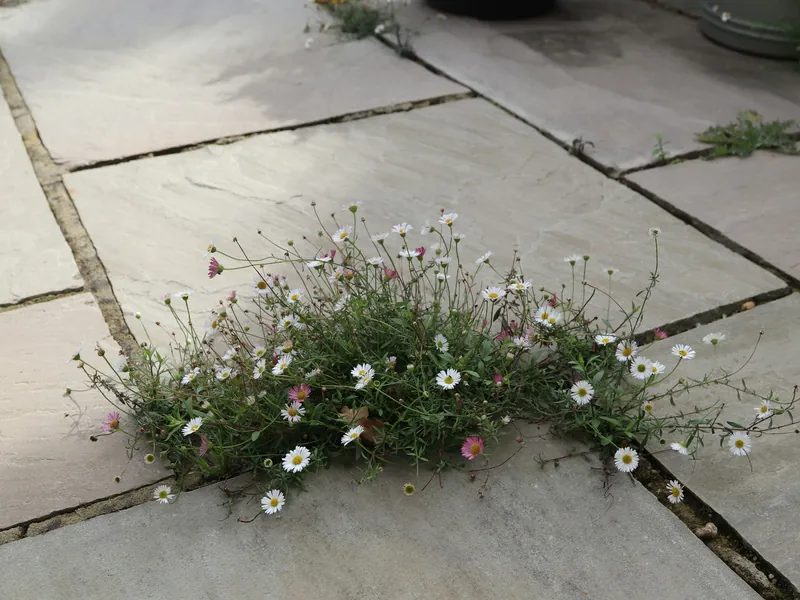
Permeable resin sweep-in compound vs wet struck mortar
Pointing holds a natural stone terrace together visually and stops weeds, ants and freezing surface water getting beneath the flags. Choosing the right jointing method depends on slab edge type, joint width and budget.
Permeable resin jointing (1- or 2-part)
- Frost & crack resistance
- High on two-part epoxy resin; zero shrinkage
- Water drainage
- Permeable; sheds surface damp through joints
- Stone staining risk
- Low when stone is pre-wetted before sweeping
- Weed resistance
- Two-part cures rock hard; weeds cannot root
Struck wet sand-cement mortar (3:1 / 4:1)
- Frost & crack resistance
- Good when ironed tight and cured out of frost
- Water drainage
- Impermeable rigid seal; relies on 1:60 surface fall
- Stone staining risk
- Moderate; careless trowelling stains pale sandstone
- Weed resistance
- Solid barrier when full depth and uncracked
Dry-brushed sand & cement (Avoid)
- Frost & crack resistance
- Poor; absorbs water, crumbles within 1 to 2 winters
- Water drainage
- Porous & chalky; washes out in heavy rain
- Stone staining risk
- Very high; cement dust permanently greys sandstone
- Weed resistance
- Cracks quickly and invites grass and moss
Watch the difference between single-part air-cured resin tubs (convenient for light foot traffic, yet softer under pressure washers) and heavy-duty two-part epoxy resin mortars (mixed with hardener on site and strong enough for regular washing and steps).
Price my patio
Four quick taps and our Irish m² price guide shows before we ask for a phone number. One local builder rings you, not five.
An Indian sandstone patio, 20 to 35 m², for joint raking and re-pointing: €1,000 to €1,800, excavated and laid.
How this m² guide is worked out
Every figure reflects going Irish supply-and-fit natural stone patio rates: digging out 200 to 250 mm of turf or old paving, laying geotextile membrane and 100 to 150 mm of compacted Clause 804 stone, bedding calibrated flags on a full 35 to 50 mm wet mortar bed with SBR slurry primer (never dot-and-dab) and pointing the joints. Narrow side-gate barrow access, deep retaining walls, soakaway crates and steep garden falls are priced after a builder checks levels on site.
Rules for neat, stain-free natural stone pointing
- Minimum 25 to 30 mm open joint depth. Never leave high bedding mortar sitting 5 mm below the slab top; shallow skins of pointing always crack and lift.
- Pre-wet porous sandstone before resin sweeping. Saturating stone pores with clean water stops resin binder clinging to the riven face and creating glossy picture-framing.
- Iron wet sand-cement joints with a pointing slicker. Compressing wet 3:1 sharp sand and cement mortar tightly into joints closes shrinkage pores and keeps moisture out.
- Never dry-sweep neat sand and cement and hose it down. Water never penetrates evenly, leaving weak crumbly powder below a paper-thin crust that turns sandstone chalky grey.
Need old joints restored? Read extensions and re-pointing and sealing and black-spot care.
Related patio guides
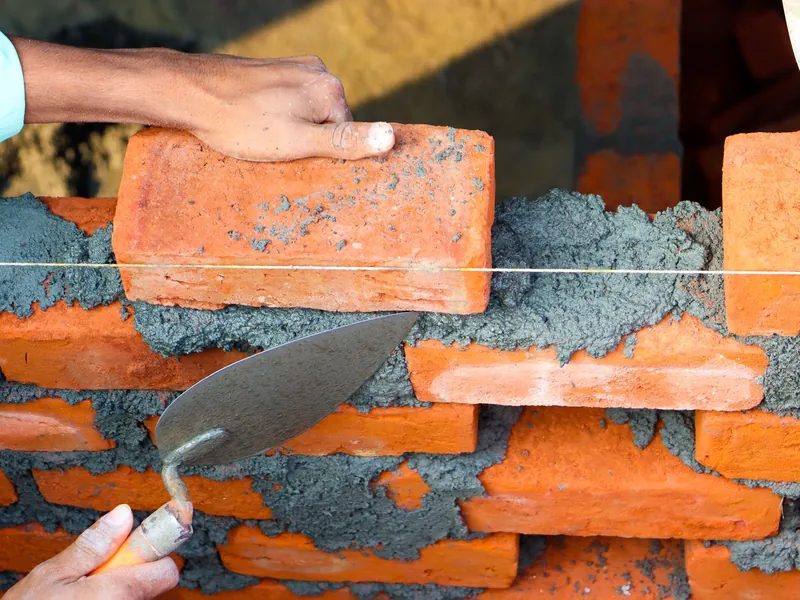 Full mortar bed vs dot-and-dabWhy five-spot bedding fails in Irish frost and how SBR slurry locks every slab.
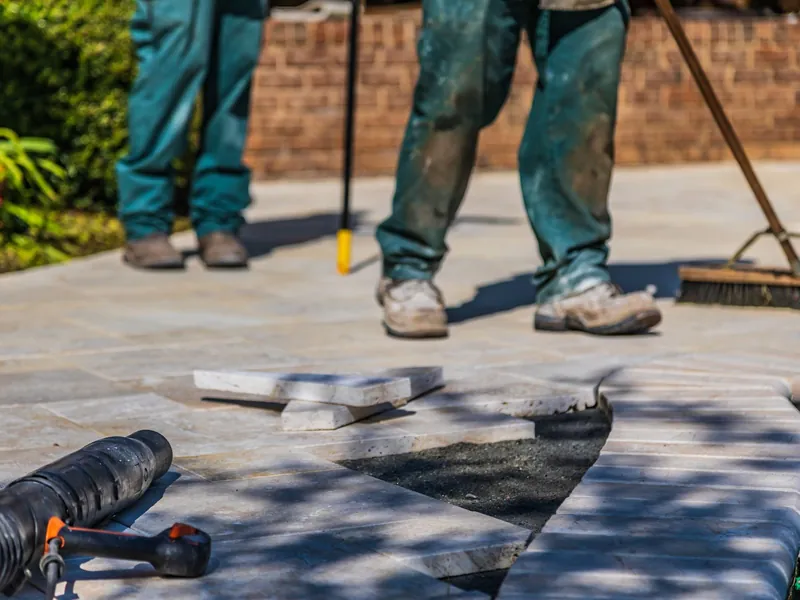 Extensions & re-pointingRaking failed mortar, extending old stone terraces and fixing rocking slabs.
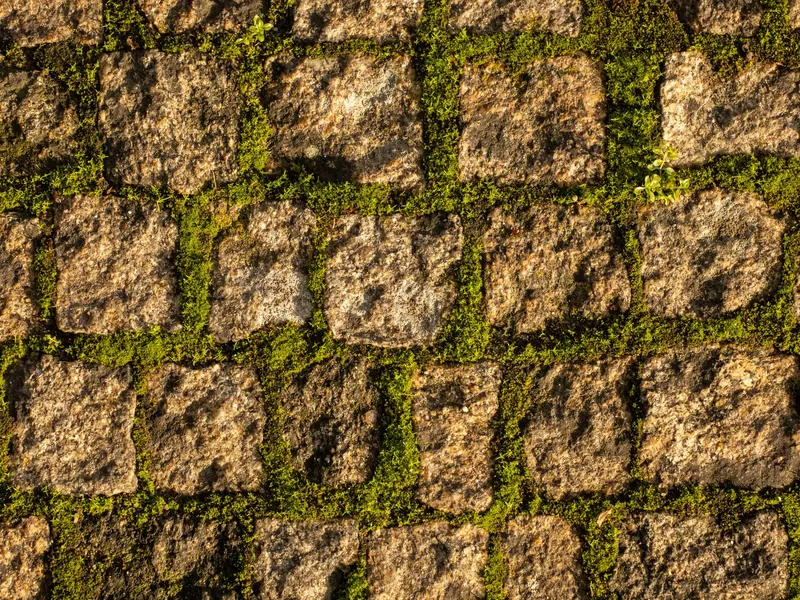 Sealing & black-spot careBreathable impregnating sealers on sandstone, algae washes and acid-safe limestone care.
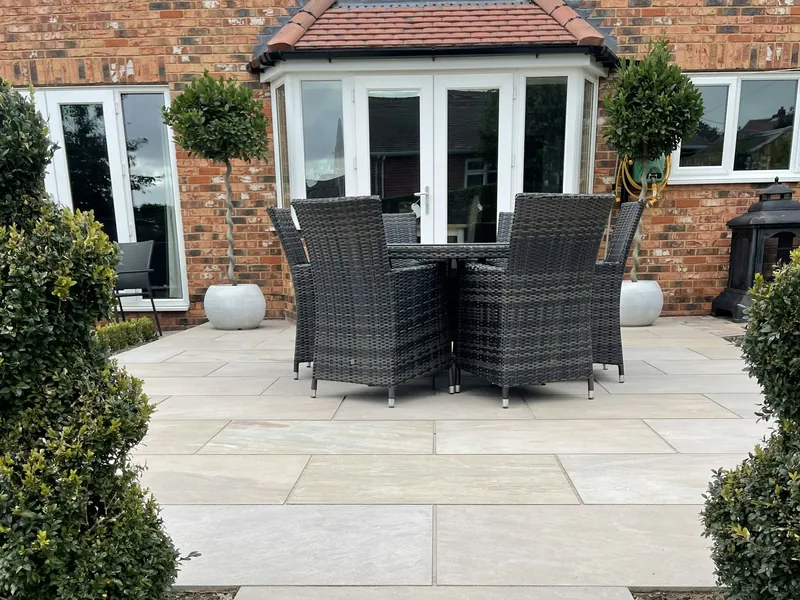 Indian sandstone patiosKandla grey, autumn brown and mint calibrated flags laid on full mortar beds.
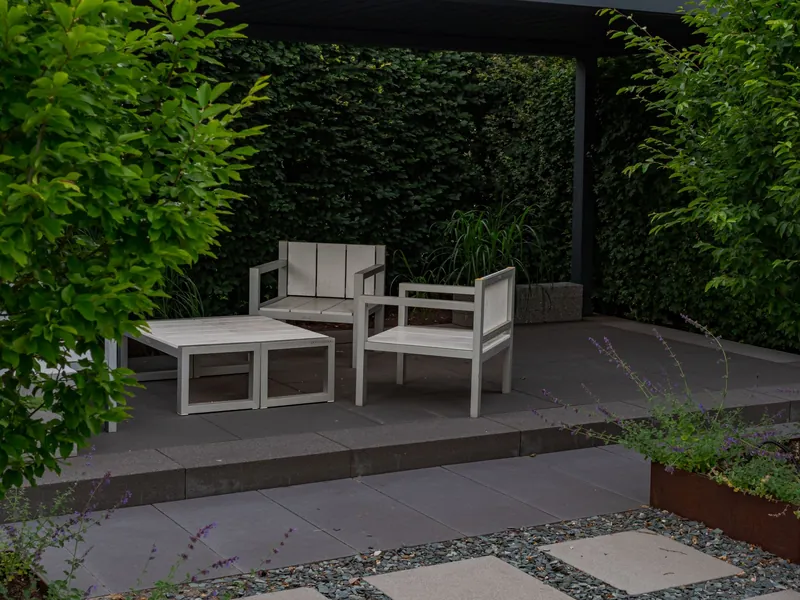 Irish limestone patiosKilkenny blue-stone and Irish black limestone flags that age cleanly outdoors.
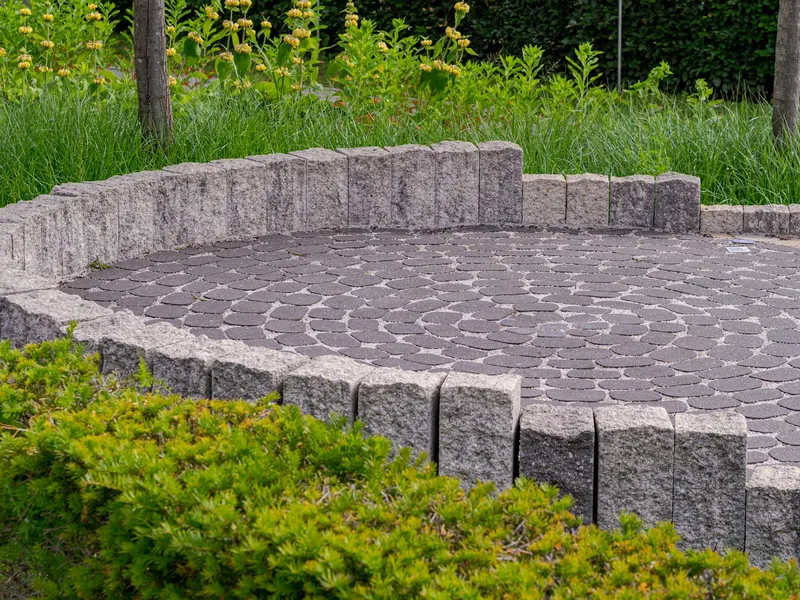 Cobbles, setts & pathwaysCropped granite setts, sandstone cobbles, borders and crazy-paving terraces.
Common patio questions in Ireland
Is two-part resin pointing worth the extra material cost over mortar?
On calibrated sandstone, granite and limestone patios in Ireland, two-part resin usually pays back in speed, frost durability, zero cement staining and clean uniform colour.
Can I pressure-wash permeable resin joints?
Wait until fully cured, then keep the lance on a wide fan nozzle at least 200 mm off the joint line. Two-part epoxy resin handles cautious washing well; single-part air-cured resin can erode under aggressive jets.
What joint width works for riven Indian sandstone vs sawn granite?
Riven hand-cut sandstone edges vary slightly and look cleanest at 8 to 12 mm joints. Machine-sawn flamed granite and Kilkenny limestone suit tighter 5 to 8 mm joints.
Can you point a patio in damp Irish weather?
Permeable resin compounds are actually applied wet with clean water, making them practical in overcast Irish weather provided temperatures stay above 3 to 5 °C and heavy downpours are not washing resin out.
Every natural stone patio guide and county page
Natural stone patios
Groundworks & Irish specs
See your stone patio price before anyone visits
Pick the natural stone, rough m² footprint and groundwork needed. When you want a measured quote, your outline goes to a single patio builder in your county.