
Natural stone sealing, algae and black-spot care
Porous Indian sandstone in Ireland attracts dark black-spot lichen and green algae unless protected with a breathable impregnating sealer (€14 to €24/m² applied). Flamed granite needs little sealing thanks to its dense igneous grain, while Irish limestone must only ever see pH-neutral or alkaline stone washes, never acid cleaner.
Choosing breathable impregnating sealers for Indian sandstone, keeping limestone safe from acid and clearing Irish black-spot lichen.
Free, no obligation. One local builder prices it, not five.
- €14–€24/m²breathable impregnating sealer applied
- 3–5 yearstypical re-sealing interval on sandstone
- Zero acidkeep acid brick washes off limestone
- Breathablenever trap moisture with gloss film
Breathable impregnating sealers vs glossy film sealers
A patio laid on a wet sand-and-cement bed over Irish clay always moves trace amounts of water vapour upwards during dry spells. Coating natural stone with a cheap acrylic gloss film traps moisture underneath, turning the surface cloudy milky white and peeling away in frosty flakes within 18 months.
A proper vapour-permeable impregnating sealer soaks invisibly into the microscopic stone pores, repelling surface water, barbecue oil and black-spot spores while still letting sub-base moisture evaporate harmlessly.
Indian sandstone
- Porosity & winter risk
- Moderate porosity; prone to black-spot lichen and leaf tannin
- Safe Irish care routine
- Apply breathable impregnating sealer once dry & salt-free; treat spots with sodium hypochlorite wash.
Flamed granite
- Porosity & winter risk
- Very low porosity; highly frost and algae resistant
- Safe Irish care routine
- Sweep leaves promptly and wash with warm soapy water; optional impregnator around outdoor dining zones.
Irish & Kilkenny limestone
- Porosity & winter risk
- Low to moderate porosity; reacts badly with any acid
- Safe Irish care routine
- Use neutral or alkaline biocide wash only; optional breathable colour enhancer if you want a darker wet tone.
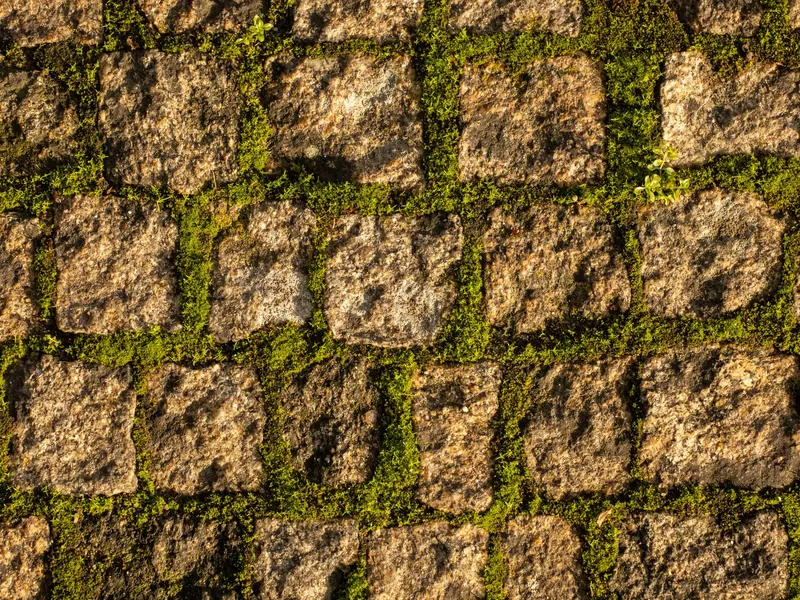
Natural stone cobbles
- Porosity & winter risk
- Joints hold shade and damp more than stone faces
- Safe Irish care routine
- Annual low-pressure rinse and biocide spray stops moss rooting across shaded sett lines.
Price my patio
Four quick taps and our Irish m² price guide shows before we ask for a phone number. One local builder rings you, not five.
An Indian sandstone patio, 20 to 35 m², excavated from lawn on Clause 804: €3,650 to €5,200, excavated and laid.
How this m² guide is worked out
Every figure reflects going Irish supply-and-fit natural stone patio rates: digging out 200 to 250 mm of turf or old paving, laying geotextile membrane and 100 to 150 mm of compacted Clause 804 stone, bedding calibrated flags on a full 35 to 50 mm wet mortar bed with SBR slurry primer (never dot-and-dab) and pointing the joints. Narrow side-gate barrow access, deep retaining walls, soakaway crates and steep garden falls are priced after a builder checks levels on site.
Removing Irish black-spot lichen without wrecking stone
Black-spot lichen looks like tiny dark ink splatters embedded inside sandstone pores. Even a commercial 3,000 PSI pressure washer rarely blasts black-spot roots out completely and instead strips the soft top layer of sandstone and blows pointing apart.
- Wait 8 to 12 weeks before sealing brand-new stone. Give sub-base moisture and natural mortar salts (efflorescence) time to dry out before sealing.
- Apply dedicated sodium hypochlorite black-spot remover on dry stone. Pre-wet neighbouring lawn borders, brush solution evenly across dry flags, let it dwell per instructions and rinse thoroughly.
- Never use hydrochloric brick acid on limestone or dark stone. Acid dissolves calcite in Irish limestone and oxidises iron minerals in buff sandstone into orange rust stains.
- Sweep fallen oak, birch and laurel leaves weekly in autumn. Wet rotting leaves release brown tannins that stain unsealed mint and Kandla sandstone overnight.
Check individual stone traits on Indian sandstone, Irish limestone and flamed granite.
Related patio guides
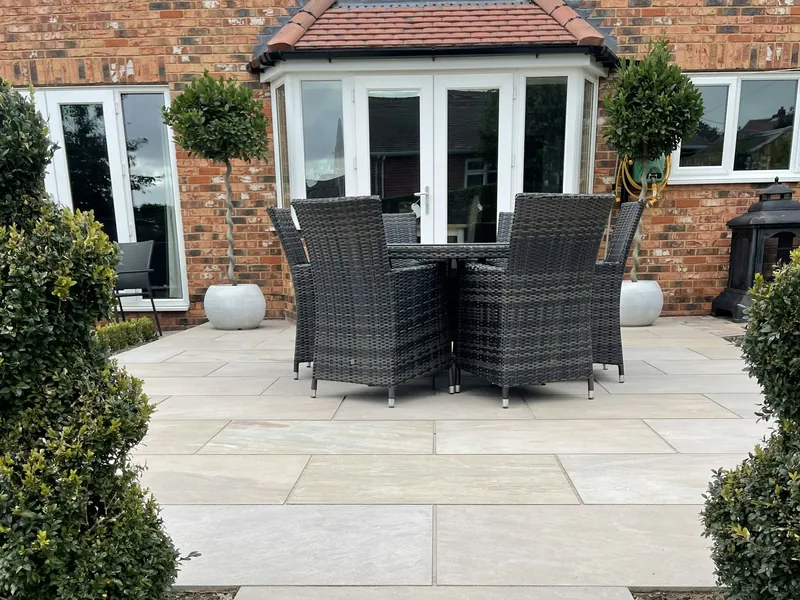 Indian sandstone patiosKandla grey, autumn brown and mint calibrated flags laid on full mortar beds.
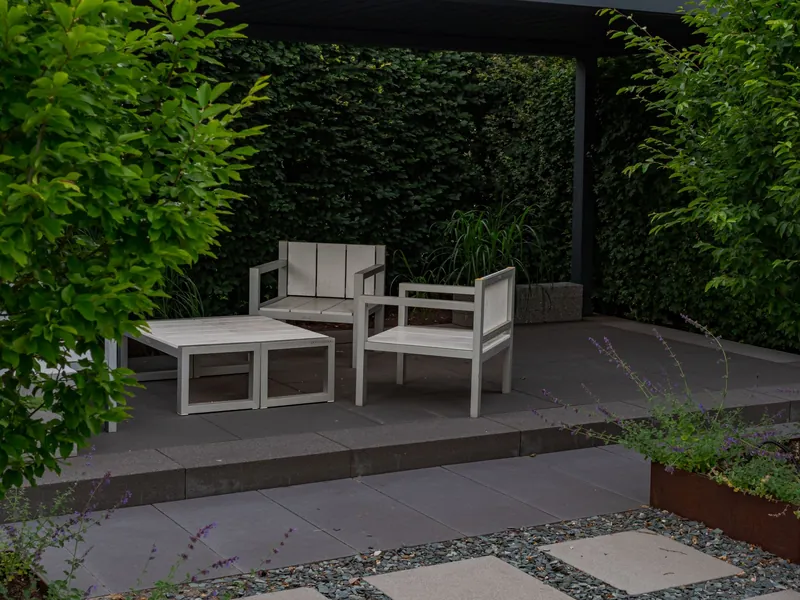 Irish limestone patiosKilkenny blue-stone and Irish black limestone flags that age cleanly outdoors.
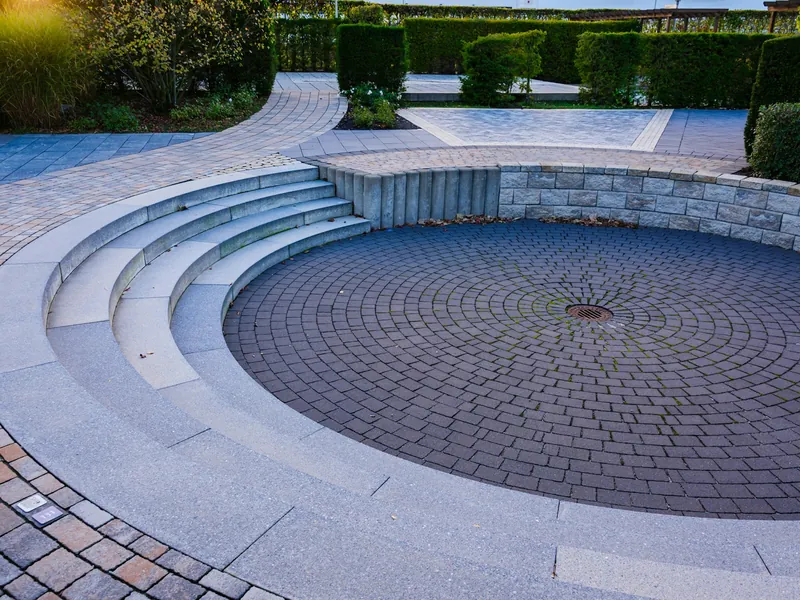 Flamed granite patiosSilver, yellow and dark flamed granite paving with high wet-foot grip.
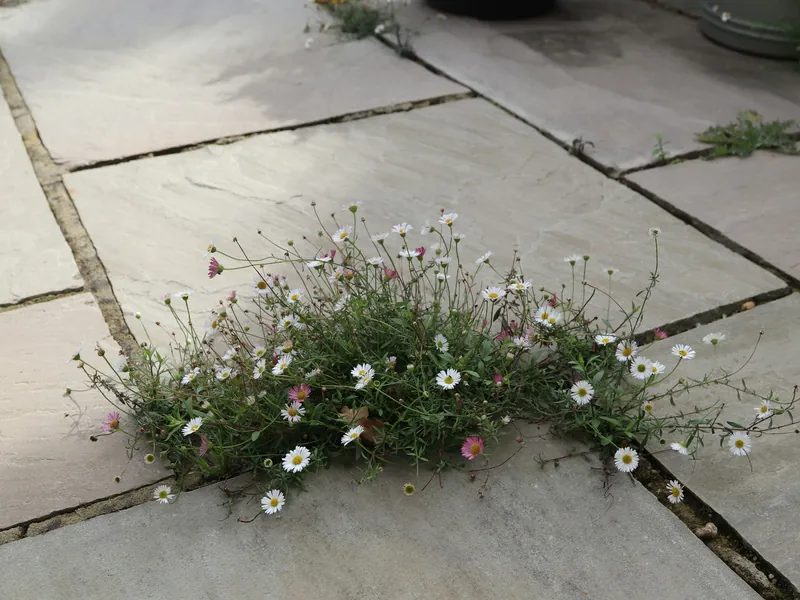 Resin vs mortar pointingPermeable sweep-in resin joints versus traditional struck wet sand-cement mortar.
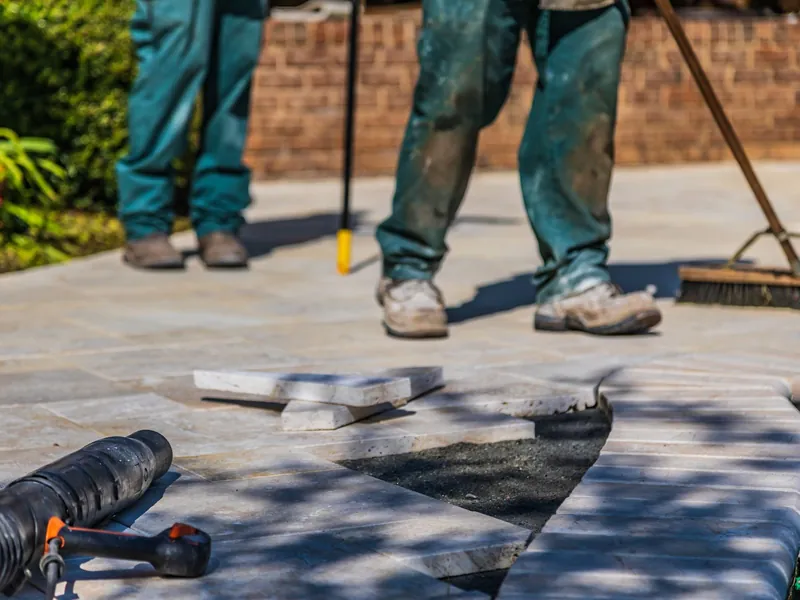 Extensions & re-pointingRaking failed mortar, extending old stone terraces and fixing rocking slabs.
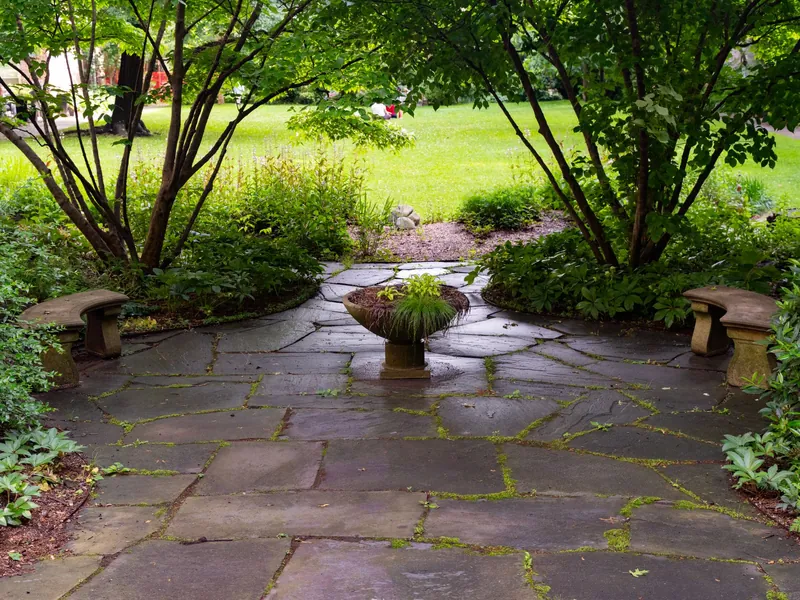 Stone types comparedSide-by-side durability, porosity, grip and m² cost across Irish garden stones.
Common patio questions in Ireland
How much does professional natural stone patio sealing cost in Ireland?
Supplying and applying two coats of breathable impregnating sealer on clean dry stone typically costs €14–€24/m².
Why did black spots appear on my Indian sandstone patio?
Black-spot is a hardy lichen spore carried by wind that roots deeply into porous damp sandstone, especially under overhanging trees or north-facing garden walls.
Should I seal Indian sandstone straight after it is laid?
Unless the stone is pre-sealed on all six sides before laying, it is safer to wait 8 to 12 weeks of fair weather so bedding moisture and efflorescence salts exit freely before sealing.
How often does natural stone need re-sealing?
Quality breathable impregnators typically protect Indian sandstone for 3 to 5 years in Ireland. Sprinkle water onto the flags each spring: when drops stop beading and darken the stone quickly, it is ready for a fresh coat.
Every natural stone patio guide and county page
Natural stone patios
Groundworks & Irish specs
See your stone patio price before anyone visits
Pick the natural stone, rough m² footprint and groundwork needed. When you want a measured quote, your outline goes to a single patio builder in your county.